Topics
92% Compliance, NPS 68, Google 3.6 Stars. Which One Should You Believe?
Why your customer experience data seems to contradict itself, and what that is actually costing you
Three Numbers. Three Realities. One Problem Nobody Sees.
Picture a multi-location restaurant chain. Their numbers look solid, even impressive.
Their professional mystery shoppers rate operational compliance at 92%. Their internal VoC NPS sits at 68. Respectable. Their Google reviews? 3.6 stars, with a strongly negative connotation.
Three metrics. Three different realities. Three ways of looking at the customer experience. Leadership does not know what to believe.
This scenario is not hypothetical. It represents the reality of most multi-location chains we work with at Lanla.
And the answer to the question “which one should you believe?” is always the same: all three. Because they are not measuring the same thing.
Why Each Metric Measures a Different Reality
Every metric has its own lens, tied to the method that generates it. Understanding where the data comes from means understanding what it can tell you, and especially what it cannot.
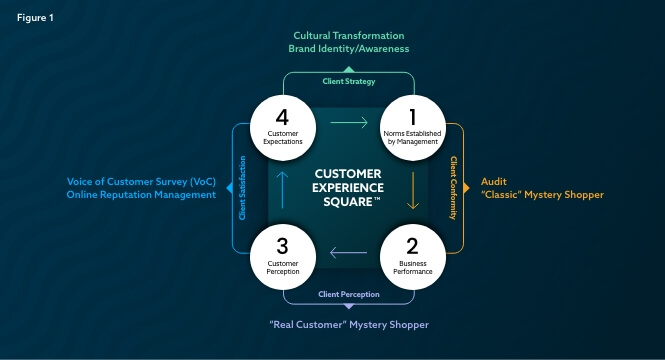
Mystery shoppers measure operational compliance. They evaluate whether your procedures are followed, your service standards applied, your protocols respected. This number is objective, reproducible, and independent of how the customer was feeling that day. It answers the question: is the machine running properly?
VoC surveys (Voice of Customer) measure the declared perception of customers who agreed to respond. In a VoC program, satisfied customers respond at higher rates. An NPS of 68 in this context is a solid result, but it reflects the perception of a subgroup, not the full customer base. That is the unavoidable limitation of any metric that depends on voluntary participation.
Google reviews capture the public, spontaneous voice, often with a strongly negative connotation. These are customers who felt the need to speak up without being asked, most often after a strongly negative experience. It is the rawest signal available, one that escapes all internal control. And it is also the one your future customers read first.
Relying on a single program and evaluating performance through a single metric does not give you a full view of the customer experience. Yet this is the reality of many organizations.