Three Channels, Three Moments

May 13, 2026 / 5 min read

Topics

Mystery ShoppingBrand ExperienceLocal MarketingVoC

Three Channels, Three Moments

A Continuum of Prevention, Intervention, and Public Amplification

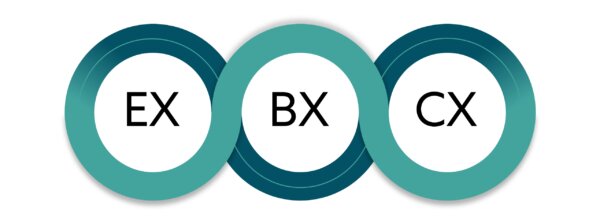
These three tools don’t measure the same thing. Not because they’re imperfect: they’re designed to act at three different moments in your customers’ journey. Together, they form a continuum: from prevention to intervention, all the way to managing your brand’s reputation in public.

This continuum operates on two simultaneous axes. The axis of dissatisfied customers, whom you want to intercept before they express themselves publicly. And the axis of satisfied customers, whom you want to activate as advocates. Each tool plays a precise role on both.

Mystery Shoppers: Prevent and Identify

The mystery shopper is an operational tool. What it captures happens in real time, during the service interaction: the welcome, adherence to procedures, conformity with the standards you have set yourself. Its role is to allow you to course-correct operationally, before gaps accumulate and start reaching your customers.

This is the prevention tool. It measures what actually happened, not what the customer remembers happened. Memory reconstructs. Direct observation captures the raw moment.

On the promoter axis, the mystery shopper also plays a first role: when the evaluator experiences something remarkable, it becomes a signal to activate the amplification mechanism. The outstanding experience identified is the starting point of a story worth sharing.


Mystery Shopper  |  During the service interaction
Role: operational prevention tool.

Course-corrects before gaps reach your customers. Also identifies outstanding experiences worth amplifying.

VoC: Intercept Before It Goes Public

A few hours after the experience, the customer has had time to decide what it was worth. That is where the VoC comes in. For the dissatisfied customer, the survey offers a private microphone, between them and you. An opportunity to speak directly, before the only available platform becomes a public social network.

The data we have accumulated over the years is clear: 96% of dissatisfied customers leave without ever reaching out directly. The VoC is your interception net. The goal is to heal the relationship before it becomes a public crisis.

On the promoter axis, the VoC plays the opposite role: when a customer responds very positively, that is the moment to invite them to express themselves publicly. To leave a review, to share their experience on social media. The VoC turns a satisfied customer into an ambassador.

VoC (Voice of Customer Survey)  |  A few hours after the interaction
Role: intercept dissatisfied customers before they express themselves publicly.

Turn satisfied customers into ambassadors. Heal the relationship before it goes public.

Google Reviews: The Last Step in the Continuum

The Google review represents the final step in the continuum. It arrives when the first two steps have taken place, or when they were absent. For the dissatisfied customer who was never given a private microphone, the public platform is the only option left. That is crisis management in public.

But for the satisfied customer whom the VoC directed toward public platforms, the Google review is the culmination of the promoter axis. It is the emotion that was still strong enough to be shared, days later, with strangers.

This is why a Google review with strong negative sentiment does not necessarily indicate an operational failure on the day of the visit. It may indicate the absence of a private interception mechanism. If the VoC had captured that customer, the conversation would have happened between you.

Google Reviews  |  Several hours or days after the interaction
Role: the final outcome of the continuum.

Public crisis management for unintercepted detractors. Public amplification for well-directed promoters.

Two Axes, One Continuum

Read together, these three tools reveal two parallel logics operating at the same time.

Detractor axis
Prevent (mystery shopper) → Intercept privately (VoC) → Manage publicly (Google).
If a Google review carries strong negative sentiment, the question is not ‘which data is right.’ The question is: at which step did the continuum break down?

Promoter axis
Identify (mystery shopper) → Amplify privately (VoC) → Make it public (Google).
A highly satisfied customer who never leaves a public review has probably never been invited to do so. The redirection mechanism is missing.

Most organizations read these three sources as three independent assessments of their performance. They try to determine which one best reflects reality. That is not the right question. The real question: is my continuum working? Do my dissatisfied customers have a private space to speak before turning to Google? Are my promoters being invited to share their experience publicly?

What This Changes in How You Make Decisions

Once you understand the continuum, the gaps between the three sources become informative rather than contradictory. A high mystery shopper score alongside Google reviews with strong negative sentiment does not mean your data is wrong. It means the interception mechanism between the two did not work: the VoC did not capture those customers before they expressed themselves publicly.

An excellent VoC score paired with disappointing Google reviews may indicate that your survey is not reaching your most dissatisfied customers, and also that your promoters are not being actively invited to share their experience on public platforms.

Organizations that consistently improve their customer experience are not trying to figure out which tool is right. They make sure all three steps of the continuum are in place and functioning in both directions.

Want to see how your three sources work together as a continuum in your organization?

Explore Hexia or reach out to our team for a demonstration.

How to Integrate the Three Steps Into Your Decisions

Hexia, our proprietary platform, is built for this integrated reading. It allows you to visualize mystery shopper results, VoC data, and Google reviews side by side, so you can see where the continuum is working and where it breaks down, location by location.

For a manager, this means no longer having to switch between three separate dashboards to understand what is happening across service locations. All three steps of the continuum are readable at a single glance.

About the Author
Christian Watier is Chief Scientific Officer at Lanla. He holds a doctorate in experimental psychology from Universite Laval and a postdoctoral fellowship from the University of Carleton. Over 25 years, he has delivered more than 1,000 conferences and training sessions on customer experience measurement across Canada. He oversees all of Lanla’s CX research and measurement programs.


Latest news

Trois canaux, trois moments
Three Channels, Three Moments
A Continuum of Prevention, Intervention, and Public Amplification These three tools don’t measure the same thing.…
More
Two Types of Mystery Shoppers, Two Types of Data
I’m often asked the same question in organizations that use mystery shopping: our scores are good.…
More
Les erreurs visibles vs invisibles
Why Silent Customers Cost More Than Those Who Complain
And how to hear those who don’t speak up, before they are already gone. The leader of a restaurant chain…
More
Angles Morts CX
92% Compliance, NPS 68, Google 3.6 Stars. Which One Should You Believe?
Why your customer experience data seems to contradict itself, and what that is actually costing you…
More
Moins de 30% de vos clients répondent à vos sondages de satisfaction.
Your Surveys Are Not Enough. And it’s not a questionnaire problem.
How to Measure What 70 to 90 Per Cent of Your Customers Will Never Tell You Directly. Picture…
More
App Lanla mises à jour Mars 2026
April 2026 Version Update: Performance Upgrades, Dark Mode & Airport Missions
We’ve refined the Lanla app to deliver a smoother, faster, and more reliable experience across all…
More
Marketing local : les leviers pour être visible près de vous
Local Marketing: Actionable Levers to Win “Near Me” Searches
To appear at the right moment, businesses need more than visibility. They need structured local signals…
More
Google met fin à la section Questions-Réponses
Google Q&A by API Is Retiring
Here’s How Businesses Can Stay Visible in AI Search For years, Google Q&A helped customers get…
More
google update 2025
Google update 2024 2025
Google Local SEO Update: 2024 Proximity and Experience Boost What changed? In mid-2024, Google rolled out…
More
Why Review Sites Matter More Than Ever for Your Business
Today’s customers rarely walk into a store or book a service without checking a few review…
More
Boost Your Visibility: Local Citations, Search Local & Organic SEO
In the competitive landscape of local search, mastering local citations, local search optimization, and organic SEO…
More
How to Optimize Your Google My Business Profile
Create a Google Business Account and Optimize Your Profile
In a hyperlocal digital landscape, being visible at the exact moment a customer is searching for…
More
Who Is the Target Audience?
Who Is the Target Audience? Why This Question Is Key to Your Success
Understanding who is the target audience for your business isn’t just marketing jargon; it’s the fundamental…
More
Social Listening
Master Your Brand’s Narrative with our Social Listening Solutions
In today’s dynamic digital landscape, truly understanding your audience requires more than just a presence –…
More
CRM
Strengthen Customer Relationships with Lanla’s CRM-Inspired Solutions
Effective customer relationship management (CRM) goes beyond just managing contacts — it’s about truly understanding and…
More
Looking for small jobs to make money
A smart alternative to small jobs to make money
If you’re exploring small jobs to make money — and want something meaningful and flexible —…
More